Category: + Deep-paintings
-
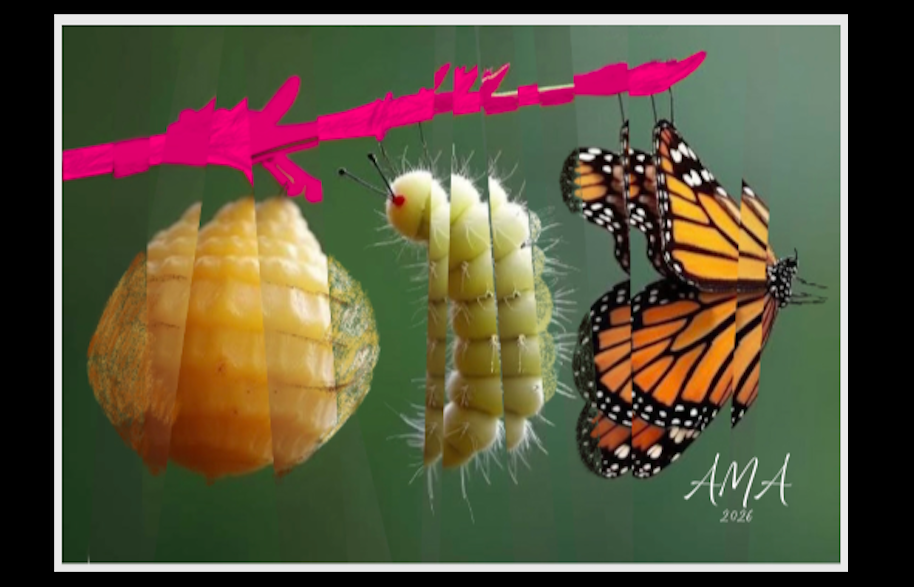
Deep-Painting: Dynamic
Inspired by a post from my friend Shakhida Akhmedova, I present another version—or variation—of “Deep Painting,” in which different cross-sections of the frontal plane reveal a process. This serves as yet another counter-argument to the characterization of visual knowledge as superficial. As this image demonstrates, a continuous flow can be encapsulated within a single picture.
-
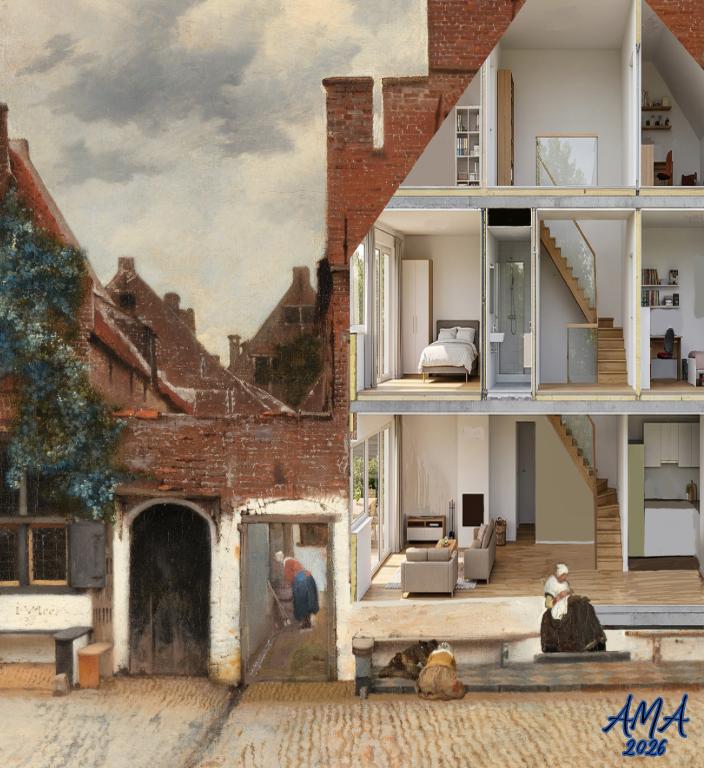
“My little street”
Let us take Vermeer’s painting The Little Street (c. 1657–1658) and apply the central concept of the “Deep-Painting” style: generating an epistemic gain (an increase in knowledge). In this instance, this is achieved by setting back the frontal plane of the main façade, thereby revealing the interior of the house and its various elements.
-

How should it be understood?
How should it be understood? It is a “Deep-painting” work in which a hand has been taken and specific sections of the frontal plane have been recessed to varying depths, thereby revealing the underlying bone tissue. This characteristic is inherent to “Deep-painting”; it represents a gain in knowledge that challenges the apparent superficiality of visual understanding.
-
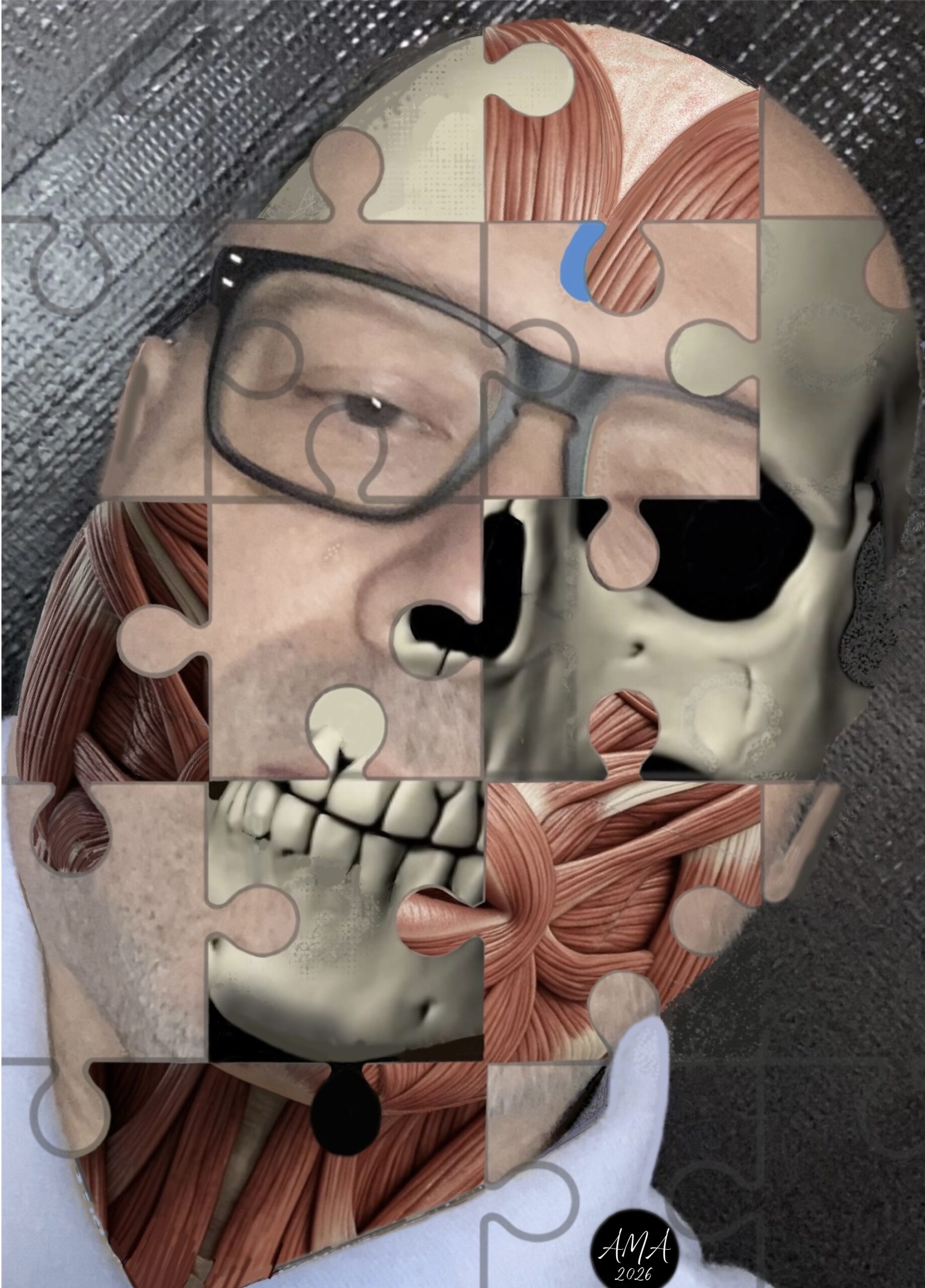
Deep Portrait
What kind of image is this, and how should it be understood? It is a “Deep-painting” work in which a face has been taken and specific sections of the frontal plane—arranged like puzzle pieces—have been recessed to varying depths, thereby revealing the underlying muscle and bone tissue. This characteristic is inherent to “Deep-painting”; it represents…
-
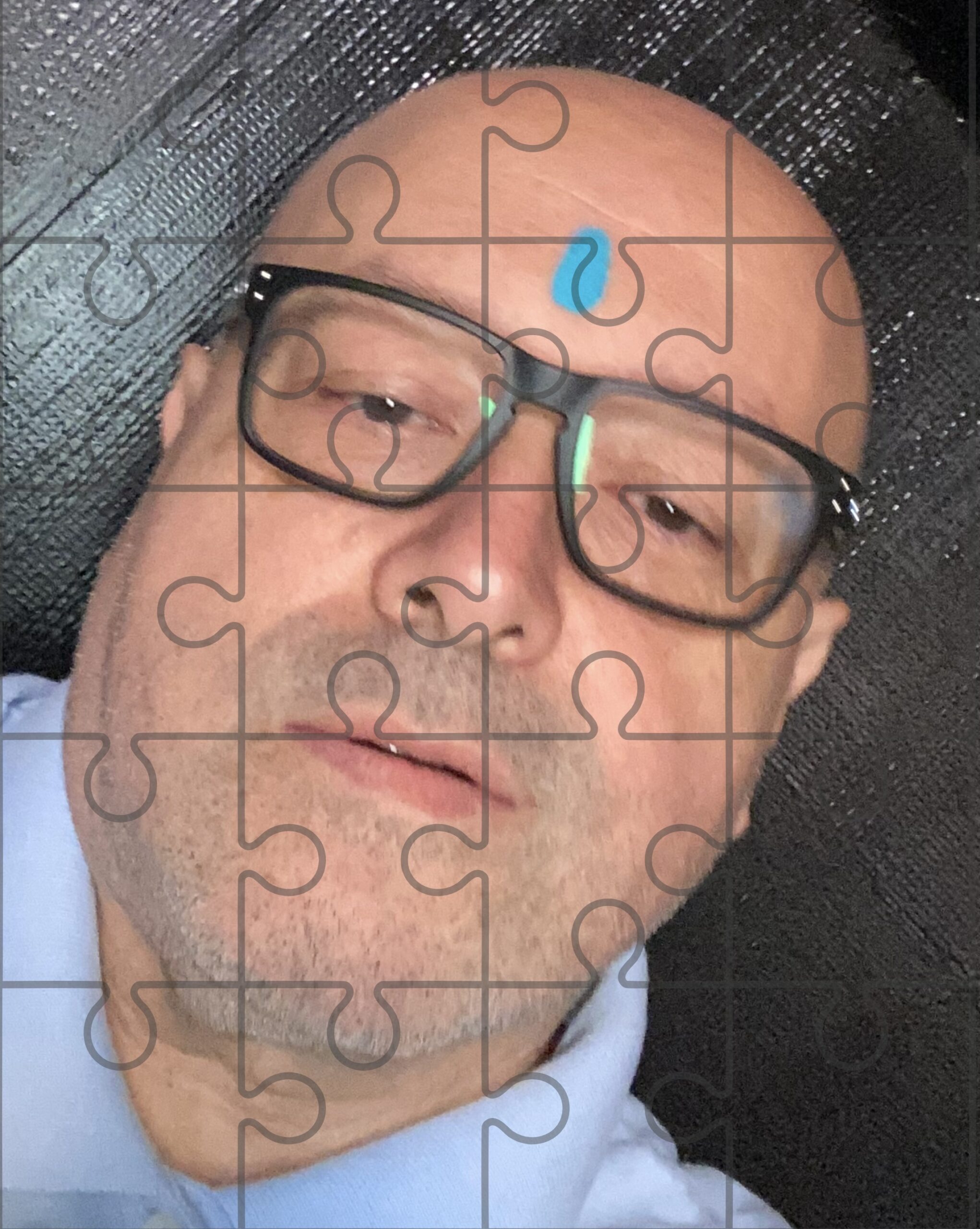
Muscle transformation
The concept of “Deep-painting” allows for an understanding of this video, as the frontal plane of my head has been recessed (in a curved manner), reaching down to the musculature. This process has yielded knowledge—a characteristic feature of this style—thereby challenging the conventional conception of visual knowledge (which is typically superficial and one-sided).
-
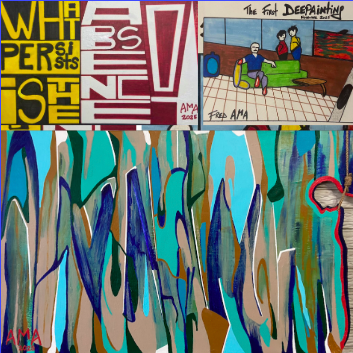
Examples of the 3 paths
Examples of the three paths: Suprapictorialism, Deep-painting & Neoposterism
-
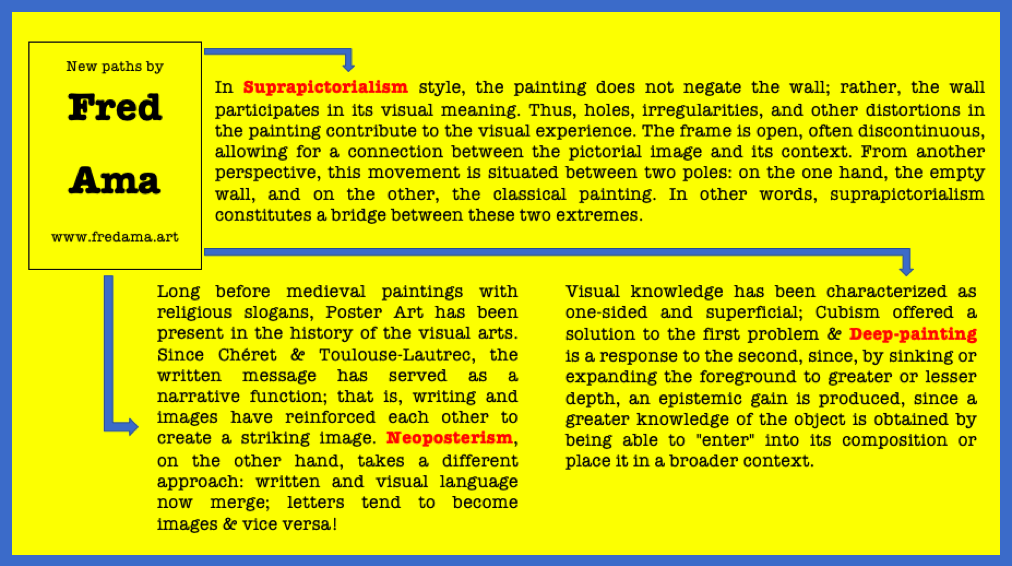
New Paths
New Paths Suprapictorialism: 1. We distinguish between the pictorial image and the totalizing image; we are interested in the latter. 2. Painting is not the negation of the wall, but rather the wall participates in its meaning. 3. Therefore, painting can present holes, irregularities, and other distortions. 4. The frame is open, often discontinuous, allowing…
-
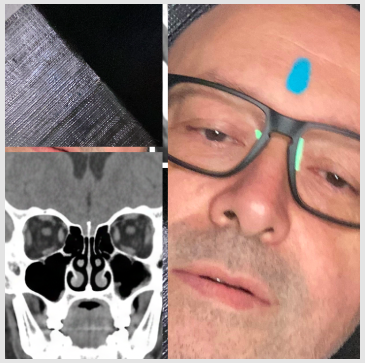
Myself Deep Painting
Deep Painting (DP) tells us that the frontal plane is only ONE of the planes that can be captured in a painting, we can also generate infinite planes, since we can sink or remove the plane that is presented, gaining knowledge, in a parallel and diagonal way, totally or partially, entering into the objects and…
-
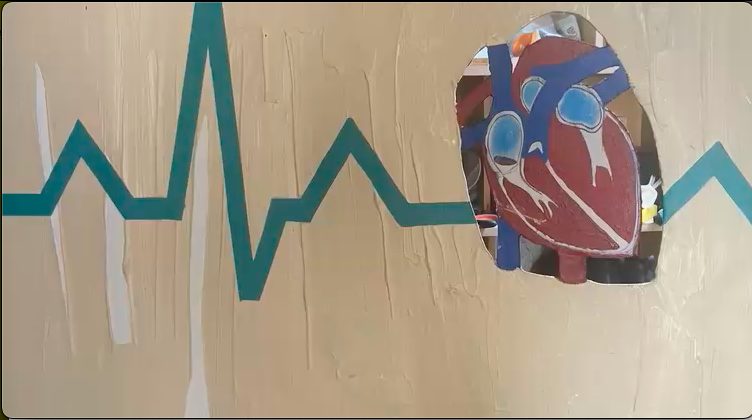
TELL-TALE HEART
My new painting: Telltale Heart, is starting to take shape! I created this image that mixes Deep Painting (sinking the plane so that the anatomy of the heart could appear) with a resource of Suprapictorialism, let’s not forget that this is a particular case of Deep Painting.
-

MOMBÓ ART GALLERY (Spain)
The prominent Spanish art magazine, MOMBÓ Art Gallery, published an article with my work, thank you!